

Introduction
At Infinite Insight, we always make sure that our mobile devices adhere to the latest technical specifications that our clients require. In our case, we’re now on Android 15 with the ability to update to Android 16, 17 and I believe 18 in the future. Another thing. In 2026, our minimum device specs are 4GB RAM and 64GB (tablets)/128GB (smartphones).
So why the investment in mobile hardware? Because if you want to understand the African consumer, you have to meet them where they are. And in Sub-Saharan Africa, they aren’t sitting at desktop computers. We’re talking about the majority of respondents here.
But here’s something that needs to be mentioned over and over:
When global brands try to research the African market using methodologies designed for Europe or North America, they usually fail. The digital landscape here isn’t built on fiber-optic cables running into suburban living rooms; it is built on mobile networks, prepaid data, and smartphones. In fact, most African telecoms ignored DSL (via land lines) and went directly to 3G, 4G and 5G which was the right decision since land lines were never ubiquitous compared to mobile networks.
Therefore If your research strategy isn’t aggressively mobile-first, you’re already missing the data. So here’s why mobile-first data collection is the only way to capture the continent…well, at least until fibre optic becomes more affordable for the masses.
1. The Screen Reality: Designing for the Thumb, Not the Mouse
In the West, a respondent might fill out a 40-minute online survey on a 24-inch monitor. In Africa, that same respondent is taking your survey on a 6-inch smartphone screen while commuting on a matatu or waiting in line.
Long, complex grid questions that look great on a desktop become an unreadable, frustrating mess on a phone. At Infinite Insight, we optimize all our quantitative instruments for mobile interfaces. We use large buttons, swipe gestures, and bite-sized questions. If the survey isn’t thumb-friendly, your response rates will plummet, and your dropout rates will skyrocket.
2. The Connectivity Gap: Offline-First is Mandatory
Assuming you’ll have a stable 4G or 5G connection in every corner of the diverse markets we operate in is a serious mistake. Rural areas, and even parts of major urban centers, suffer from spotty connectivity.
This is exactly why we deploy robust offline-capable apps like SurveyToGo, ODK Collect, KoboCollect etc. on our Galaxy devices which allows our interviewers to collect massive amounts of complex data deep in a rural village with zero internet access. The data is securely stored locally on the device, and the moment the interviewer ventures into a connectivity zone, the app automatically syncs the data to our servers. So no data is lost, and no time is wasted.
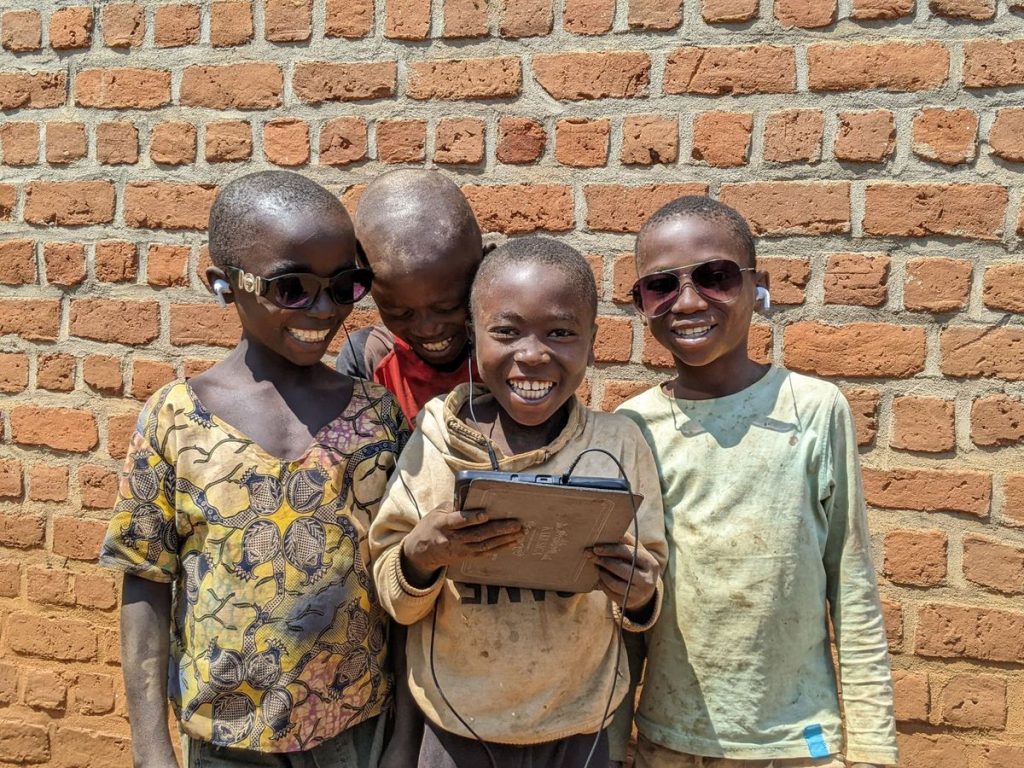
3. Bypassing Literacy and Banking Barriers
Since Africa is a diverse continent with thousands of languages and varying levels of formal literacy, a text-heavy survey will alienate huge portions of the population.
Mobile-first doesn’t just mean smaller screens; it means smarter data collection. Thankfully, our devices allow us to incorporate audio prompts, image-based multiple-choice questions, and even video clips into the survey flow. We can capture a respondent’s answer visually and audibly without relying purely on text.
Furthermore, in markets where the unbanked population is high, utilizing mobile tech allows us to instantly disburse airtime or mobile money incentives directly to the respondent’s phone, ensuring high cooperation rates.
Conclusion
Whenever a client partners with us, they aren’t just getting a “research agency”; they’re getting a partner who understands the structural realities of Africa. Our dynamic team of social and market research professionals knows how to leverage mobile technology in order to bypass infrastructure gaps which allows them to reach the true voice of the consumer.
Lastly, having modern Galaxy devices allows us to conduct timely, reliable surveys since said devices are our direct line to the African consumer. So if your current research partner is trying to reach African respondents through a desktop lens, it’s time to talk to us. Why?
Because “We know Africa” but we also know howto listen to it.