

Introduction
If you step into any business conference in 2026, you’ll notice that the conversation is primarily dominated by Artificial Intelligence. In the market research industry, AI is undeniably revolutionizing how we work. It can transcribe hours of Focus Group Discussions in seconds, clean massive quantitative datasets, and spot statistical anomalies faster than any human analyst.
But as AI takes over the heavy lifting of data processing, a critical question arises: Do we still need human fieldworkers?
At Infinite Insight, our answer is an absolute yes. While AI is a powerful engine, it suffers from what we call the “Empathy Gap.” In other words, AI can process the words people say, but it can’t understand the human context behind them. So here’s why human fieldworkers remain the irreplaceable stars of African market research:
1. Trust Doesn’t Download
In many communities across Sub-Saharan Africa, market research isn’t just about asking questions; it’s about gaining access. When a stranger approaches a household with a tablet, the gatekeeper’s first instinct is caution, which is quite understandable.
AI can not smile, offer a respectful greeting in the local dialect, or even read the body language of a hesitant respondent. Instead, it takes a dynamic, culturally grounded human “being” to build rapport, explain the purpose of the research, and create a safe space where the respondent feels comfortable in sharing their honest opinions. Without that trust, the data collected is worthless.
2. Reading the Unspoken
Without a doubt, AI is excellent at transcribing audio. But it only sees the text.
Imagine a Focus Group Discussion (FGD) where a respondent answers a question about a new product with a polite, “Yes, I like it!” An AI tool might log that as a positive response. However, a trained human moderator sitting in the room noticed the respondent shifted uncomfortably in their seat, avoided eye contact, and hesitated before speaking.
But the human moderator knows to probe deeper, asking follow-up questions in order to uncover the real truth. Although AI sees the literal answer, the human moderator reads the room. In African cultures, where politeness and social harmony are deeply valued, reading the unspoken is often more important than the words themselves. This is yet another reason why “We know Africa” is a strong part of our corporate identity.
3. Cultural Nuance Over Literal Translation
AI translation engines are improving, but they still frequently stumble over cultural idioms, slang, and social taboos. A literal translation of a survey question might make perfect sense to a machine, but it may sound offensive or confusing to a local respondent.
Thankfully, our versatile and experienced Research team along with our supporting staff do not just translate words; they also localise meaning. Most importantly, they know how to phrase a question regarding sensitive topics — like household finances or health — in a way that respects cultural boundaries while obtaining accurate data.
Conclusion
At Infinite Insight, we enthusiastically embrace AI where it’s appropriate. It definitely helps us to adapt faster while making some of our tasks more accurate and more efficient. However, we view AI as a tool, not a replacement.
Here’s another way to look at it:
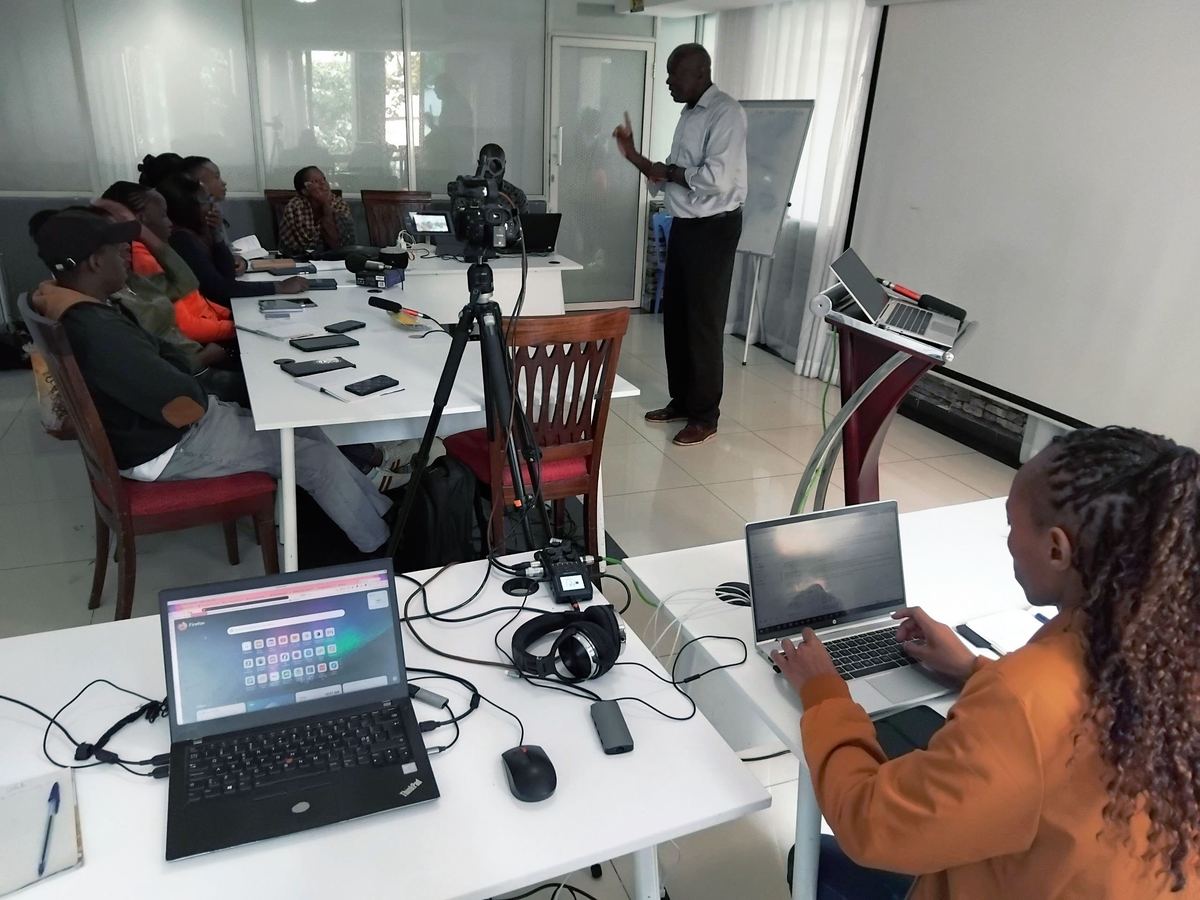
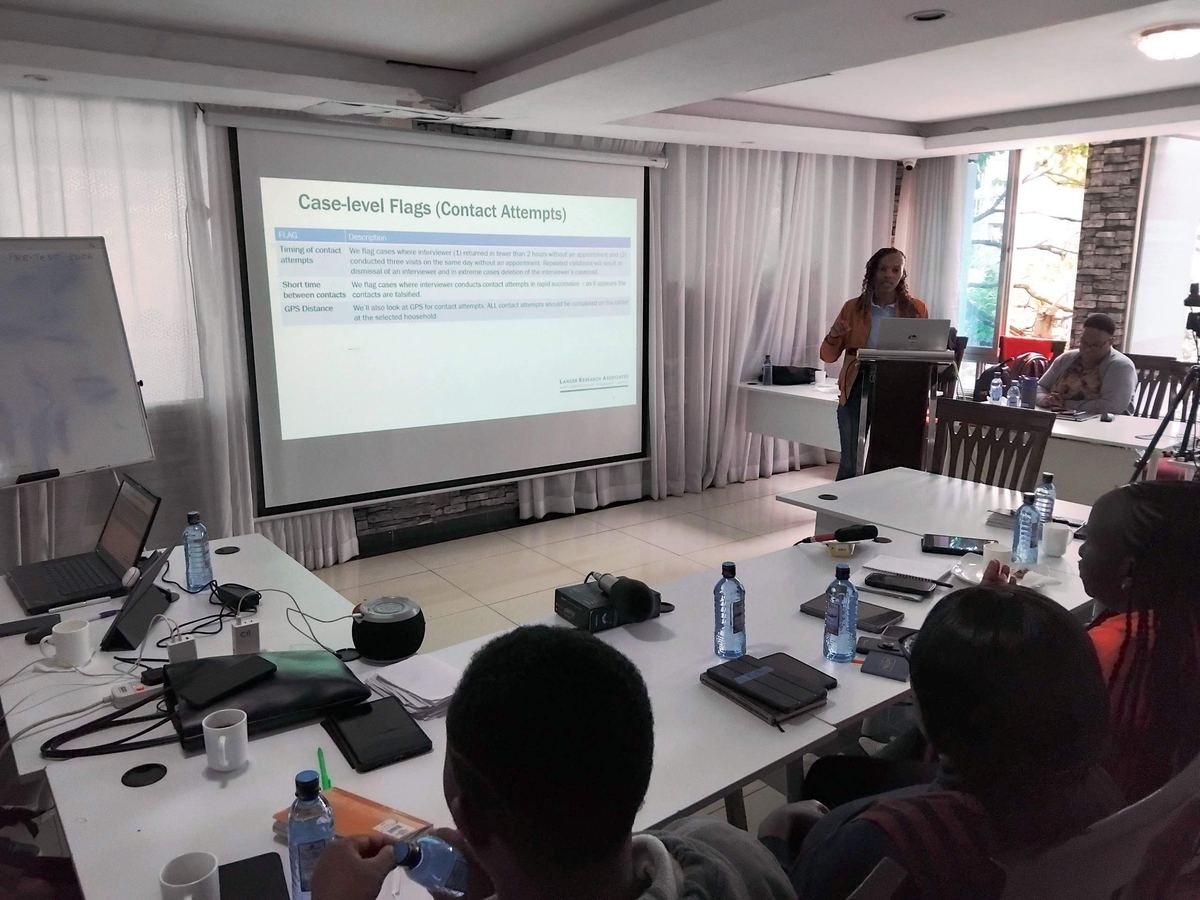
AI is the engine that processes the data, but our human fieldworkers are the steering wheel that guides it. On a continent as diverse, nuanced, and deeply human as Africa, the empathy gap is real. That’s why we invest in people — especially in live training (see above 2 pics) before any field staff are sent out to collect data.
Therefore to truly understand Africa, you don’t just need algorithms. You actually need people who know Africa. If you’re looking to conduct a new social or market research project in Africa, please contact us!